


Creatine, done right.
5g creatine + 1,266mg electrolytes in one honest scoop.
- Creatine5,000mg of pure monohydrate, the exact form and dose the research ran on.
- Electrolytes1,266mg to replace the sodium, potassium and magnesium you sweat out.
- Nothing elseNo sugar, no fillers, no proprietary blend hiding the amounts.
- The mathA premium electrolyte plus a separate creatine tub costs more per day than one scoop of this.
- The habitTwo subscriptions, two containers, and measuring salt into a glass every morning. This is one scoop.
- The dosesPre-measured at full clinical amounts, so you are never guessing whether the numbers line up.
- Why 1,000mgBuilt for people who train hard and sweat. If you sweat heavily, that is the whole point of it.
- Everyone differsSweat sodium varies a lot between people, so needs are individual. We are not going to claim everyone needs the same amount.
- Check firstIf you manage high blood pressure or you are sodium-sensitive, talk to your doctor before adding it in.
- Training daysOne scoop in 12-16 oz water, sipped while you train, so the electrolytes go in as you sweat them out.
- Rest daysStill take it. Saturation does not care what day it is. Take it whenever you like.
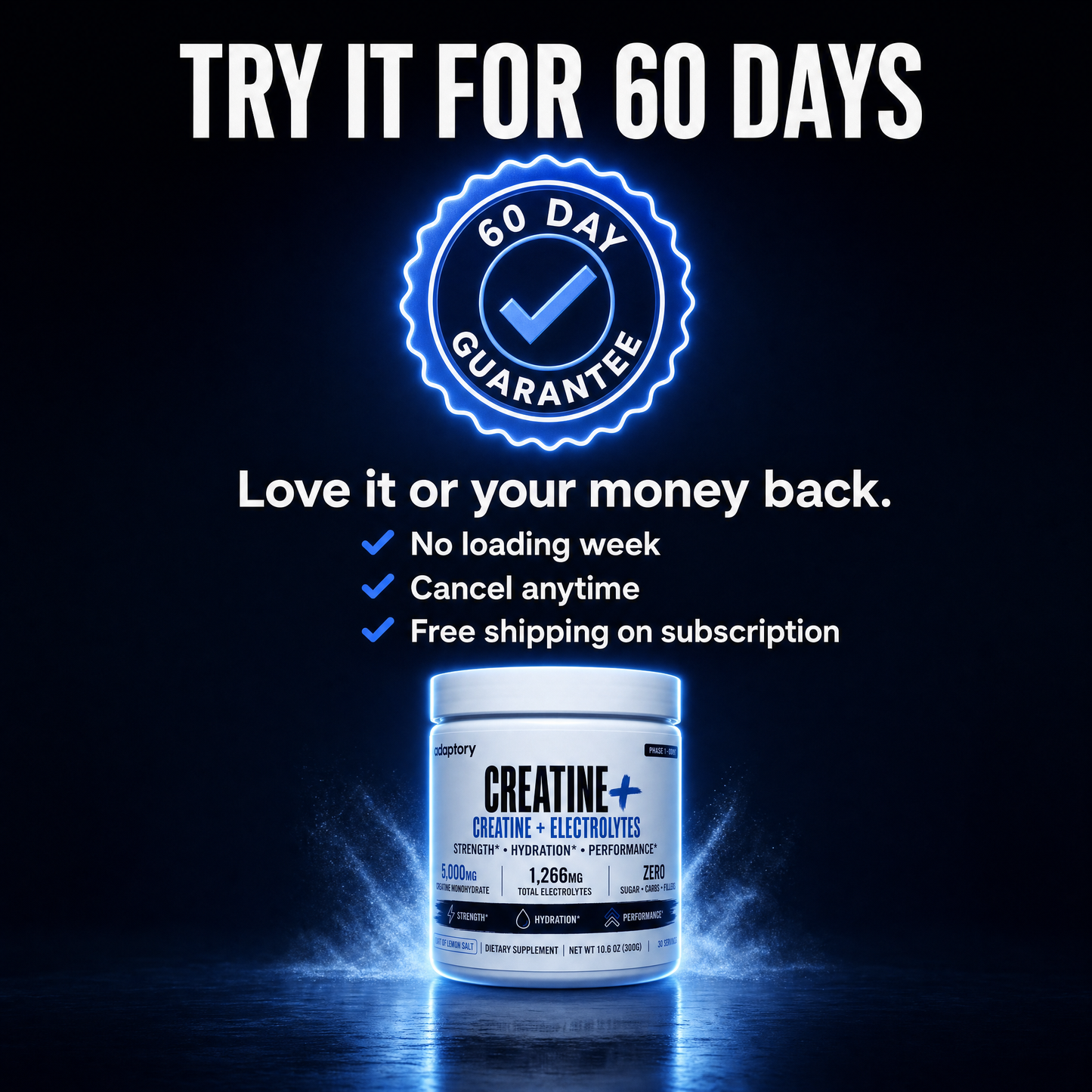
- No loadingNo 20g loading week, no cycling on and off. Just one scoop daily.
- FlavorA light, clean salty lemon, sweetened with a touch of stevia. No sugar, no dyes.
- Why saltyBecause it has 1,000mg of real sodium in it. That is the point.
- Creatine5,000 mg (monohydrate)
- Sodium1,000 mg (sea salt)
- Potassium200 mg (chloride)
- Magnesium66 mg (malate)
- OtherNatural Flavors, Stevia Extract, Silicon Dioxide
Couldn't load pickup availability
One scoop.
Two clinical doses.
Zero shortcuts.
Not a new creatine. The one that finally works.
Per serving. All numbers from published nutrition facts.
| Adaptory | LMNT | Liquid IV | Gatorade | |
|---|---|---|---|---|
| Creatine | 5,000mg | — | — | — |
| Sodium | 1,000mg | 1,000mg | 500mg | 160mg |
| Potassium | 200mg | 200mg | 370mg | 35mg |
| Magnesium | 66mg | 60mg | — | — |
| Sugar | 0g | 0g | 11g | 34g |
Most creatine brands skip this. It's the reason yours isn't working.
They want creatine they can use.
One scoop a day. Built on 680+ clinical trials. No loading phase.
4 ingredients. Every dose on the label. Nothing hidden.
No loading phase. One scoop daily. Here's the progression.
Everything you need to know before your first scoop.
Every batch independently verified. Full COA published.
ISO/IEC 17025:2017 accredited laboratory · Results represent sample tested
*These statements have not been evaluated by the Food and Drug Administration. This product is not intended to diagnose, treat, cure, or prevent any disease. Scientific citations referenced in product descriptions are for educational purposes only.
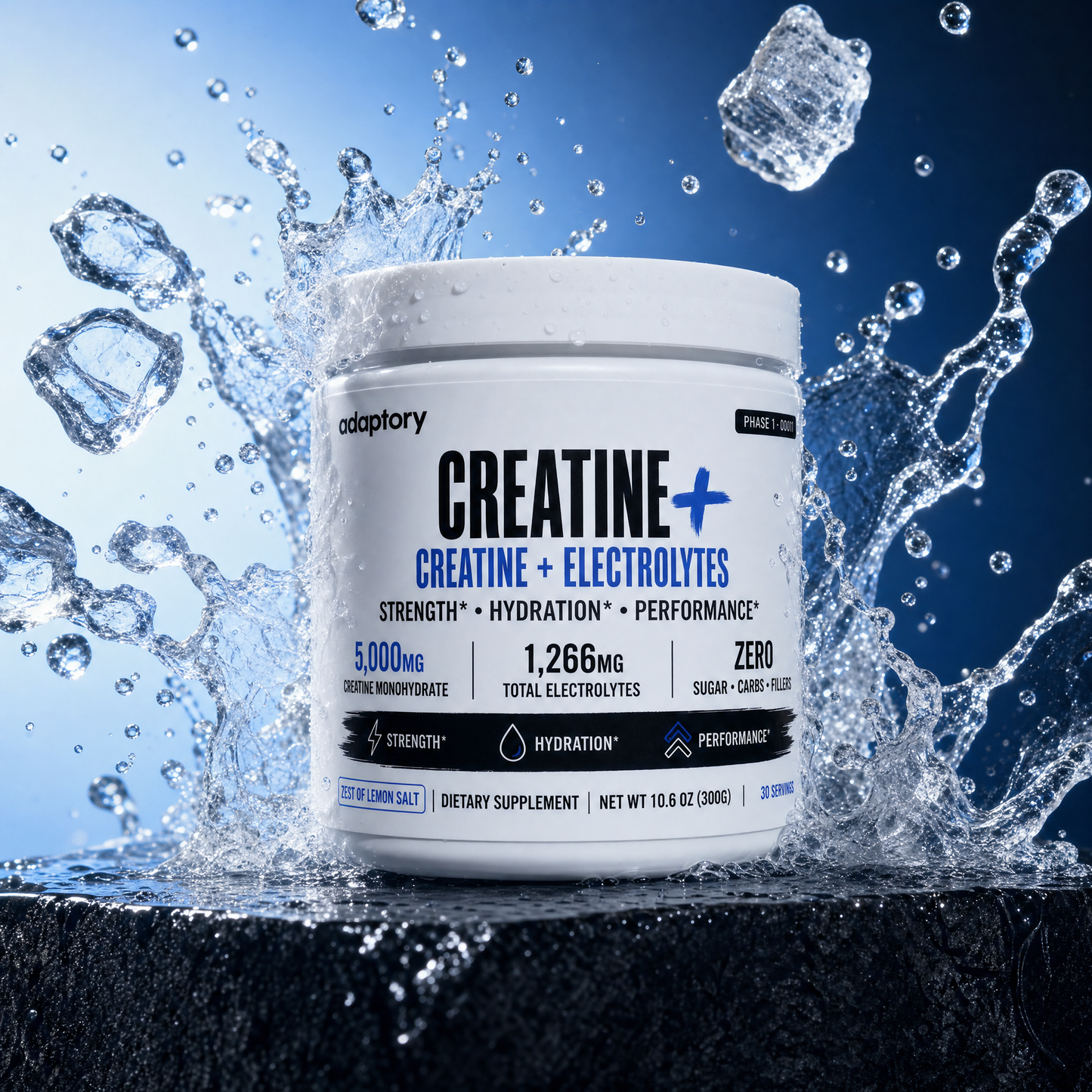


Finally, a creatine that finishes the job.
5g of creatine for strength. A full electrolyte load for hydration. One scoop while you train.

Two jobs. One scoop.
Creatine makes you stronger. Electrolytes keep you going. You need both when you train hard, so we put both in.
Creatine builds the strength
More force on every hard rep. More power off the line. And more lean muscle the longer you stay on it.
Electrolytes keep you going
You sweat out salt every session. This puts it back, so you stop gassing out halfway through and stay sharp to the last set.
Fully dosed. Nothing hidden.
We got tired of paying for a list.
The supplement aisle is full of everything-brands. Sixty ingredients on the label, not one at a dose that does anything. You are paying for a list, not a result. So we built the opposite.
We do one thing, all the way
No kitchen-sink blend. Creatine done right, with the electrolytes training actually burns through.
The amount the research used
A full 5g of creatine. Not a sprinkle sized to fit on a crowded label next to fifty other things.
Every number is printed
No proprietary blends. No hiding tiny amounts behind the word blend so you cannot see how little is in there.
Creatine changes what your body needs to stay hydrated.
The longer you take it, the more it stacks up.
Creatine is not a pre-workout you feel kick in. It builds up quietly and pays you back over weeks and months.

Lift heavier
- More strength and power in your lifts
- More lean muscle over time
- Faster recovery between sessions

Stay powerful longer
- Your brain runs on the same fuel your muscles do
- Early research links creatine to focus and mental sharpness
- Most noticeable when you're tired or run down

Recover for tomorrow
- Helps you keep the muscle you build
- One of the few things that matters more with age
- A reason people never stop taking it
It tastes like salt. Because it has salt in it.
Light, clean salty lemon. Not sweet, not chalky. That salt is 1,000mg of real sodium, the stuff you sweat out. If your drink tastes like candy, check the label.
Salty lemon, kept light
A clean, easy salty lemon with a touch of stevia. No sugar, no dyes, 22 calories.
Mixes clean, no grit
Stir it into 12 to 16 oz of water and it goes down smooth. No chalk, no sludge at the bottom.
It's what's inside that counts.
Four ingredients. Every one at a dose that does something. That is the whole list.
- Builds strength and power
- More reps before you fade
- The exact dose the research uses
- Keeps you hydrated
- Stops the mid-workout fade
- A real dose, not a pinch
- Supports fluid balance
- Helps keep cramps away
- Pairs with the sodium load
- Supports muscle function
- Aids recovery
- Not the cheap oxide kind
- No sugar, no fillers
- No artificial colors or sweeteners
- No proprietary blends hiding the doses
Good to know.
Hydration and energy feel steadier within a week. Your muscles fill up over three to four weeks, which is when strength and power show up. No loading week to rush it.
You can, but you'd be buying two tubs, paying twice, and hoping the doses line up. Creatine+ puts the full 5g of creatine and 1,266mg of electrolytes in one scoop, at the amounts that actually work. One scoop, one habit, no math.
Two honest reasons. First, if you train hard you sweat out real sodium, and you need it back. Second, creatine enters your cells on a sodium-dependent transporter, which is real biochemistry worth knowing. Here is what we are not going to tell you: that plain creatine does not work without it. It does. Creatine monohydrate is well absorbed on its own, and anyone claiming otherwise is selling you something. What we will say is that if you train hard you need creatine and you need electrolytes, so we put both in one scoop at full doses instead of making you buy two tubs and hope the numbers line up.
No. One scoop a day fills your muscles up over three to four weeks. No 20g loading week, no cycling on and off. Just take it daily, and on training days take it during your session so the electrolytes go in while you are sweating them out.
Still take it. This is the one thing people get wrong. Creatine works by keeping your muscles topped up, and that does not care what day it is. Miss enough days and the level drops. Training days are simply the best time to drink it, because you are losing sodium while you sip it back. On a rest day, take the scoop whenever you like. Consistency is the whole game.
Creatine draws water into the muscle, not under the skin. Because there's no loading phase, most people never notice puffiness, just fuller, better-hydrated muscles over time.
Light, salty lemon, sweetened with a touch of stevia. Each scoop is 5,000mg creatine monohydrate plus sea salt, potassium, and magnesium for 1,266mg of electrolytes. No sugar, 22 calories.
Creatine is one of the most researched supplements there is, and daily use is well studied in healthy adults. It's built for anyone training hard or working and sweating through long days who wants steady energy and better recovery. If you're pregnant, nursing, or on medication, check with your doctor first.
